|
DESCRIPTION
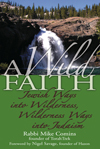
Explore the connections between God, wilderness and Judaism.
This comprehensive how-to guide to the theory and practice of Jewish wilderness spirituality unravels the mystery of Judaism’s connection to the natural world and offers ways for you to enliven and deepen your spiritual life through wilderness experience. Over forty practical exercises provide detailed instruction on spiritual practice in the natural world, including:
Mindfulness exercises for the trail Meditative walkingFour-Winds wisdom from Jewish traditionWilderness blessingsSoul-O Site solitude practice in wildernessWilderness retreat
For wilderness lovers and nature novices alike, this inspiring and insightful book will lead you through experiences of awe and wonder in the natural world. It will show you the depth and relevance of Judaism to your spiritual awareness in wilderness and teach you new ways to energize your relationship with God and prayer.
PRAISE FOR
“Provocative, playful, profound and thoughtful…. Invites us into a world-embracing, wilderness-savoring faith. Reading this book will ground your soul—and it might just save our world.”
—Rabbi Bradley Shavit Artson, dean, Ziegler School of Rabbinic Studies and vice president, University of Judaism
“There is nothing quite like this.… A welcome addition to anyone’s toolbox for Jewish meditation and spiritual life.”
—Sylvia Boorstein, author, Funny, You Don’t Look Buddhist:
On Being a Faithful Jew and a Passionate Buddhist
“Part holy book, part handbook, any Jew who has ever wondered how their Judaism, the world and their own soul can connect must read this book.”
—Dr. Jeremy Benstein, associate director, the Heschel Center for Environmental Learning and Leadership; author, The Way Into Judaism and the Environment
“A soulful manual.… Connects us back to our roots in the wilderness where we can be nourished and tested; where we can encounter God’s mystery directly.”
—Rabbi Shefa Gold, author, Torah Journeys: The Inner Path to the Promised Land
“Heartfelt, ethical, deeply practical, mystical and accessible … quietly renews the ancient alliance between Judaism and the animate earth.”
—David Abram, PhD, director, Alliance for Wild Ethics; author, The Spell of the Sensuous
“Restores our appreciation of what we so glibly refer to as Nature…. Refreshing reading for all seekers of the oldest and most important of all religions—life.”
—Rabbi Gershon Winkler, author, Magic of the Ordinary: Recovering the Shamanic in Judaism
“An exhilarating view of where we have come from and where we may choose to journey. Beautifully written and insightful. How refreshing!”
—Rabbi Jamie Korngold, author, God in the Wilderness
“For those who love nature and know little about Judaism, and those who love Judaism but know little about wilderness, Comins’s message is clear: one need not choose between the two to find potential, promise and fulfillment.”
—Publishers Weekly
| | | |
|
Reader Comments:
Submit a Comment
"This book put into words what I’ve always wanted to say. Synagogue life and nature hikes don’t have to be completely different in how we relate to God."
SUBMIT A COMMENT
|
RABBI MIKE COMINS BIO
Mike Comins is the founder of TorahTrek Spiritual Wilderness Adventures (www.torahtrek.com). The first director of education at Congregation Kol Haneshama in Jerusalem, Rabbi Comins is an Israeli desert guide and was the first resident rabbi of the Jackson Hole Chaverim in Wyoming.
Q&A WITH RABBI MIKE COMINS
 You really don’t think of nature as a “resource” or a “machine.” You think of nature as intelligent. You actually have a chapter titled “But Rabbi, Should I Talk to Trees.” What do you mean by this and can you explain how this practice of talking to trees isn’t pagan?
I happily identify with the many Hasidic rabbis who were accused of being pagan because they found God in the nitty-gritty of the world, including nature. They weren’t pantheists, but mystics. Scholars call them panentheists. It’s not that God is in the tree, but that everything is part of God.
I speak to trees because speech is the best way for humans to express themselves. I don’t worship a tree, but I try to establish what Martin Buber calls an “I-thou” relationship. Right at the beginning of his book, I and Thou, Buber relates an I-Thou encounter with a tree. He got a lot of flak for it, but he stood his ground and stood by his experience. And it’s a true experience. He describes exactly what I experience in nature. Trees don’t talk back, but in their own way, they enter into relationship with us humans.
The roots of this viewpoint go back to the origins of Judaism. God as a purely spiritual being is foreign to the Hebrew Bible. God constantly appears to the ancient Israelites in some physical form: usually smoke or as a cloud. God appears on mountaintops, or near oak trees, or in a storm. In fact, ancient Israelite religion was based on God’s influence over the natural world. The three pilgrimage holidays celebrated the three harvests of the Land of Israel (Pesach for barley; Shavuot for wheat; Succot for fruit).
The Hebrew Bible is a non-stop polemic against paganism, not because the biblical experience of divinity was so different from that of pagans, but because it was so close. But no one questions the monotheistic credentials of Abraham, Moses, or Job. When we find God in nature, we’re not rebelling against Judaism, we’re recovering our roots.
But you’re a rabbi. Don’t you like being in synagogue?
Sure I do. It’s not either/or. Spiritual life is empty without a community. It certainly shouldn’t be limited to when you’re in a National Park. I spend a lot to time in the book locating Jewish spiritual practice in wilderness in the larger context of Jewish life and spiritual life in general. But I think I’m like most people. The place I most readily have “God-moments,” the place I can always find God, is out in nature. For some people, that’s the only place they get a sense of God.
Here’s the kicker. We live in a time of rampant assimilation. Lots and lots of Jews, particularly young Jews, who don’t enjoy a synagogue service, are having “God-moments” in the natural world. But they have no idea how this connects to Judaism and a synagogue. Their most profound spiritual moments, moments that could bring them into a genuine and fruitful relationship with Jewish tradition, actually divide them from it. They think, wow, to feel something spiritual, I had to leave the synagogue and Hebrew school behind. When you consider that the formative events in the life of the Jewish people took place in wilderness, it’s more than ironic. It’s a tragedy.
Can you describe what you experience in the wilderness?
It’s hard to put into words, of course, but when I’m doing spiritual practice in wilderness, I usually feel God in my bones. I feel bathed by the “river of light.” “Energy” and “light” might not be the right words, but I feel energized and clear and morally charged to be the best person I can be and full of compassion for everything I’m seeing. It’s emotional but also physical. Through the practices in the book, I am quite aware of my body and I can tell when I’m in the River, in the divine flow. We’re always in it, but sometimes it bounces off us and sometimes we let it in. My spiritual practice is about letting it in.
When I think about it theologically, the metaphor that makes sense of it to me involves the human brain. Think of the world as analogous to the brain and God as electricity. Electric current runs through the brain along neural pathways that connect the various parts of the brain. Somehow, because of mechanisms we are far from understanding, the result is consciousness, intelligence, feelings. We can try to reduce consciousness to the physical processes of the brain, but it is obviously so much more than that. So, too, the world has an intelligence to it, that can’t be reduced to the laws of physics. I can’t prove it, but I think I’m tapping in to this divine consciousness that runs through creation, this light that connects us all and acts like a force but is intelligent, responsive, and morally commanding. For me, being in God’s presence is a very tangible experience.
DISCUSSION QUESTIONS
Download a printable version
- Discuss some of the “God-moments” you experience in the natural world.
- How does Abraham Joshua Heschel, as described in the book, differentiate between fear and awe? Do you agree?
- Do you agree with Heschel’s assertion that awe is the root of faith? What is at the root of your faith? When do you feel awe?
- Have you ever felt engaged in an I-Thou relationship with a tree or an animal? Describe what that experience was like.
- Buber’s revolutionary insight—the Eternal opens up like a window in the here and now when we enter genuine relation with a Thou—locates God in the concrete details of our lives rather than a purely spiritual dimension of the soul or far off in the Heavens. How does this compare to your experience of God?
- What is the difference between attachment (devekut) and repentance (teshuvah) as paths to God? In what ways are you more comfortable with one of these spiritual paths over the other? Why?
- What are the dangers of freely adapting non-Jewish customs into Judaism? Do you agree with Rabbi Comins’ criterion for “authentically” (p. 177) integrating new customs into Judaism? Why or why not?
CONTACT THE AUTHOR
PURCHASE BELOW
|
A Wild Faith
|